
Nicaragua in November: Five Myths About Surf, Rain and the Sea
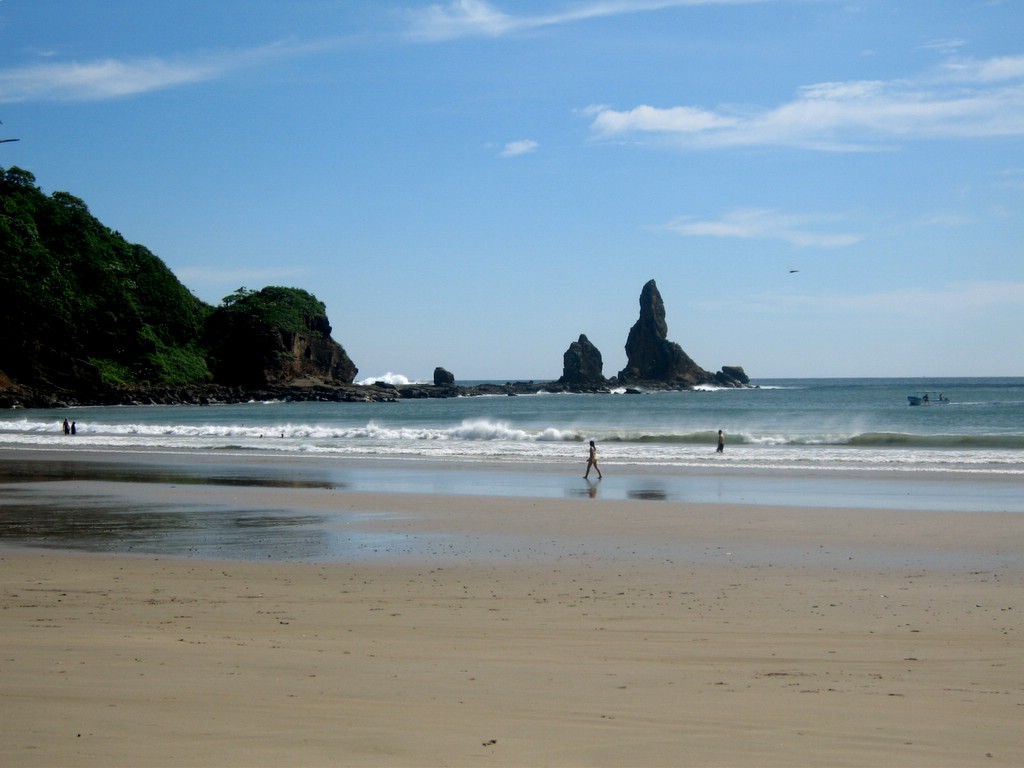
Bahía Majagual, the quiet bay just north of Playa Maderas above San Juan del Sur, photographed in September with the hills still green from the rains. Photo: cyph3r, CC BY-SA 2.0, via Wikimedia Commons.
"November is known to be sneaky." That line comes from a surfer in a 2026 r/surfing thread about southern Nicaragua, and it is a fair summary of a month most travel guides wave away as shoulder season.
On paper, Nicaragua in November sits in an awkward spot. The rainy season is ending, the big Southern Hemisphere swells of midyear are fading, and the December holidays are still a few weeks away. That in-between label scares some people off. From what we see with our guests, it also produces a lot of assumptions that do not survive a look at the numbers. Here are five of the most common ones, checked against climate records, ocean data, and the surfers who have been there.
Myth one: November in Nicaragua is still a washout
The rain does not switch off on November 1. It steps down, hard. In the Weatherbase averages that Wikipedia publishes for San Juan del Sur, October is the wettest month of the year at about 460 millimeters. November drops to roughly 110. December falls to about 28. Average highs hold near 27°C and lows near 23°C the whole way through, so the change you notice is in the sky, not the thermometer.
In practice that means November usually still sees some showers, but nothing like the long gray spells October can bring. The payoff is the landscape. The hills around San Juan del Sur and the Tola coast are still deep green from months of rain, while the beaches start getting the clear mornings people picture for dry season. If you want the full year laid out, our dry season or green season guide walks through every month in that same record.
One honest caveat. The official Atlantic and eastern Pacific hurricane seasons both run until November 30, according to the US National Hurricane Center, which also notes that storms occasionally form outside those dates. It describes a whole ocean basin rather than your beach, but a quick look at the NHC site before you fly costs nothing.
Myth two: the surf goes flat when the rain stops
This one has a grain of truth, which is why it sticks around. The long south and southwest groundswells that power Nicaragua's reefs from roughly May to October become less frequent as November goes on. Bookawave's month guide describes those swells arriving less and less through the month, with northwest swell taking over, and says the first half of November can still deliver for experienced surfers. Surf Scout, which summarizes Open-Meteo marine data for 2022 to 2025, puts the median November swell for Nicaragua at about 0.66 meters with a 10.2 second period and classes the month as outside its editors' surf season.
What those averages miss is wind. Southern Nicaragua is famous for offshore winds that blow from the Caribbean side across Lake Nicaragua and out over the Pacific beaches. Nicaragua Surf Camp, based in Popoyo, describes dry season sessions as smaller and cleaner, typically waist to head high on average days, and lists November as clean, offshore, and suitable for all levels. Average height, in other words, is not the same as average quality.
The traveler reports line up with that. In the same r/surfing thread, people who surfed Popoyo in November mentioned plenty of fun-sized days, one bigger swell during their week, and very little rain. Another surfer who has made several late November trips wrote in a 2023 thread that a decent swell seemed to show up about once every ten days, with smaller but rideable surf in between. Those are personal accounts, not a forecast, but they match the pattern the surf schools describe: lighter surf most days, the occasional surprise, and, in one commenter's words, "much less crowds" than in June.
Myth three: dry season means a cold ocean
Nicaragua's Pacific does get cooler in the dry season, just not yet. Sea Temperature's long-term records for San Juan del Sur put the November average at 27.4°C, with readings across the month between about 25°C and 29.8°C. That is boardshorts and bikini water for most people.
The cool spells come later, when the offshore wind blows hard for days at a time and pulls colder water up from below. The same records show January averaging 25.9°C and February 25°C, with February lows dipping to 17.3°C. Nicaragua Surf Camp mentions a light spring suit or thicker rash guard being occasionally useful in January and February. In November, a long-sleeve rash guard is mostly about sun. Our San Juan del Sur surf packing list covers the rest.
Myth four: turtle season is over by November
Olive ridley turtles, called paslama in Nicaragua, nest in mass events known as arribadas at Refugio de Vida Silvestre La Flor, south of San Juan del Sur. The environment ministry, MARENA, describes the arribada season there as running from about July into January.
The 2026 season has been busy. MARENA reported an eight-day second arribada in September with 30,388 nesting females counted, and Radio La Primerísima reported in early October that a third arribada had brought 32,949 females ashore since October 1. MARENA has cited an incubation period of around 52 days for protected nests, so eggs laid in early October would be due to hatch around late November, give or take nature's schedule. Late arrivals happen too. In 2024, MARENA reported a La Flor arribada that began on November 23, and the third of that season started in early January 2025.
None of that guarantees turtles on the night you go. Arribadas come in pulses, and access depends on the rangers. Our La Flor turtle guide explains how to check before you book a ride south.
Myth five: nothing happens until December
November opens with one of the most visible traditions in the country. November 2 is el Día de los Fieles Difuntos, All Souls' Day, and Nicaraguan families spend it at cemeteries. La Prensa and TN8 coverage from recent years describes the same scene in town after town: graves cleaned, repainted, and covered in flowers, families sharing food and prayers, and in places like León a flower market outside the cemetery gates. It is not on Nicaragua's list of national holidays, although La Prensa notes that the government commonly declares days off around November 1 and 2. If you pass a cemetery that weekend, it is a family occasion, so a respectful distance and no close-up photos of people at graves is the right approach.
By late month, the country is already leaning toward Purísima and La Gritería, the December 7 celebration we covered in our Purísima in San Juan del Sur guide. And for North American surfers, US Thanksgiving, which lands on November 26 this year, is a popular moment to fly south. Several surfers in those Reddit threads mentioned timing their trips around it.
Where to surf in Nicaragua in November
The smaller, cleaner pattern of November suits learners and improving surfers well, as long as they pick the right beach.
- Playa Remanso, San Juan del Sur. South of town, a beginner to intermediate beach break and the name most first-lesson groups hear. Our Remanso or Maderas comparison explains how the two beaches differ.
- Playa Maderas, north of San Juan del Sur. Often described as the most consistent spot in southern Nicaragua, so it tends to pick up whatever swell is around. Better for surfers who can already catch green waves.
- Beginner's Bay, Popoyo. A sheltered, sand-bottomed bay that local schools use for lessons. Nicaragua Surf Camp notes that Popoyo's Main Reef is cleaner and more forgiving in the dry months than in midyear. Our Popoyo beginner guide maps which peaks suit which level.
If San Juan del Sur is your base, Surf Ranch runs 1.5-hour lessons at Remanso for $60 per person, or $120 for two, with board and transport included. Rooms booked direct at surfranchnicaragua.com include breakfast, and the surf packages page shows the current multi-night options.
The habit that makes a November trip work
Set an early alarm. Nicaragua Surf Camp's advice for the dry season is to be in the water at first light or by 7 a.m., because the offshore wind that grooms the waves at dawn can blow strong enough by mid-morning to chop them up. We usually tell guests the same thing for any dry month: surf early, eat a big breakfast, and save the windy afternoon for the pool, a nap, or a slow walk through town while the hills are still green.
Reviewed by Surf Ranch
on
October 18, 2026
Rating:


No comments: